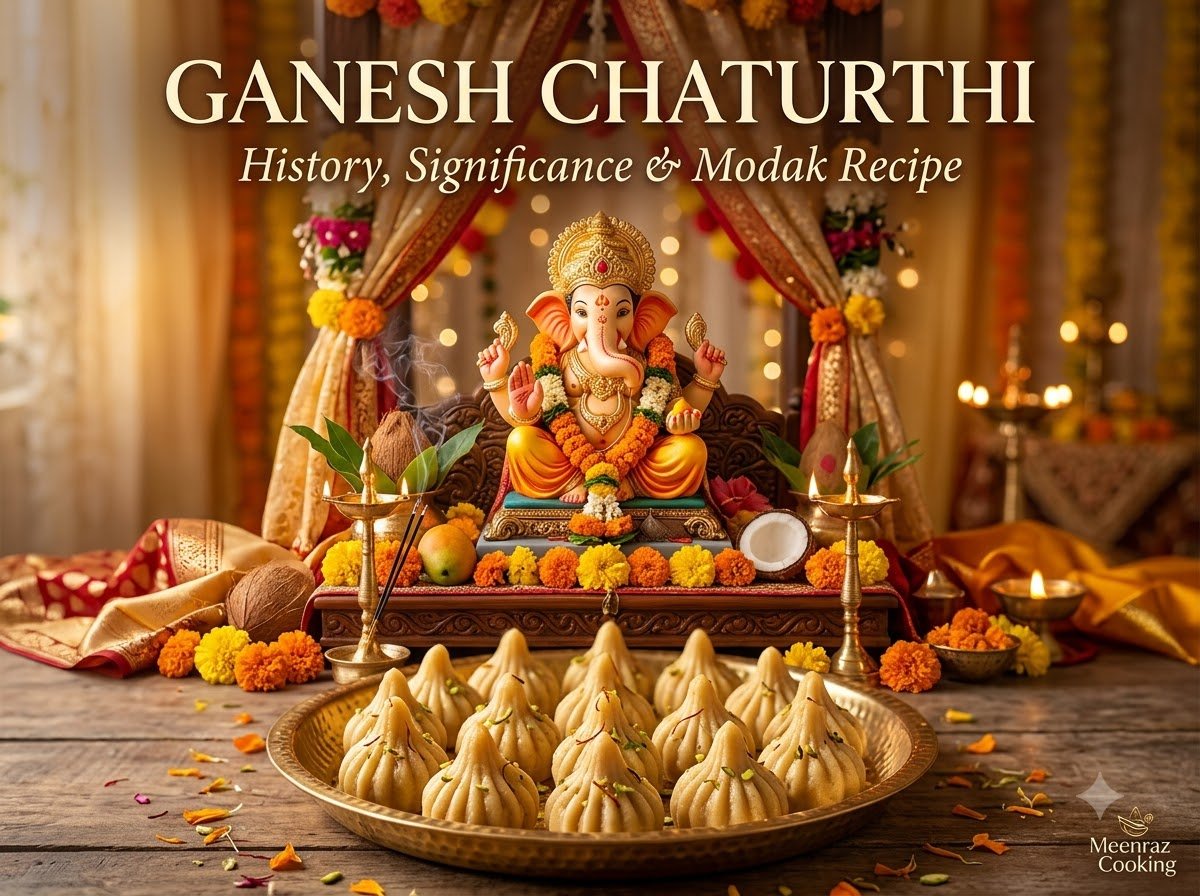
Ganesh Chaturthi is one of the most popular Hindu festivals in India. It celebrates the birth of Lord Ganesha, the beloved son of Lord Shiva and Goddess Parvati.
Lord Ganesha is worshipped as the god of wisdom, knowledge, and prosperity. He is also known as Vighnaharta, the remover of obstacles.
Every year, millions of devotees celebrate Ganesh Chaturthi with great devotion and enthusiasm. Families welcome Lord Ganesha into their homes and offer prayers, flowers, and delicious sweets.
The festival is especially popular in Maharashtra. However, people across India celebrate it with equal love and devotion.
But have you ever wondered why Ganesh Chaturthi is celebrated? What is the story behind Lord Ganesha’s birth? And why are Modaks offered to him during this festival?
Today, at Meenraz Cooking, we will explore the history and significance of Ganesh Chaturthi. We will also share an easy homemade Modak recipe that you can prepare for Ganpati Bappa.
Why Is Ganesh Chaturthi Celebrated?
Ganesh Chaturthi is celebrated to mark the birth of Lord Ganesha.
According to the Hindu calendar, the festival falls on the fourth day of the Shukla Paksha in the month of Bhadrapada.
It usually occurs in August or September.
Lord Ganesha holds a special place in Hindu traditions. Devotees worship him before beginning any important or auspicious activity.
He is believed to remove obstacles and bless his devotees with wisdom and prosperity.
During Ganesh Chaturthi, families bring beautifully decorated Ganesha idols into their homes.
They perform special prayers, sing devotional songs, and prepare delicious offerings.
The celebration may last for one and a half, three, five, seven, or ten days, depending on family traditions.
The festival concludes with Ganesh Visarjan, the ceremonial immersion of Lord Ganesha’s idol.
This beautiful festival brings families and communities together through devotion, music, food, and celebration.
The Story Behind Lord Ganesha’s Birth
The birth of Lord Ganesha is associated with a famous story from Hindu mythology.
According to a traditional account, Goddess Parvati created a young boy using the turmeric paste from her body.
She gave life to the boy and asked him to guard the entrance while she was bathing.
Goddess Parvati instructed him not to allow anyone inside without her permission.
After some time, Lord Shiva arrived at the entrance.
However, the young boy refused to let him enter.
Lord Shiva became angry, and a conflict followed. During the confrontation, Lord Shiva severed the boy’s head.
When Goddess Parvati discovered what had happened, she was devastated.
To comfort her, Lord Shiva decided to bring the boy back to life.
He replaced the boy’s head with the head of an elephant and restored his life.
The boy became known as Lord Ganesha, the elephant-headed deity.
According to Hindu religious traditions, Lord Ganesha was also granted the honor of being worshipped first.
This is why devotees pray to Lord Ganesha before weddings, housewarming ceremonies, and other auspicious occasions.
Religious Significance of Ganesh Chaturthi
Ganesh Chaturthi is more than a religious festival. It also represents wisdom, prosperity, devotion, and new beginnings.
Lord Ganesha is worshipped as the remover of obstacles. His blessings are traditionally sought before starting important work.
The festival encourages devotees to reflect on the importance of wisdom and patience.
It also brings families together through shared prayers and celebrations.
During Ganesh Chaturthi, people decorate their homes and prepare special food for Lord Ganesha.
Many communities organize public celebrations with music, devotional singing, and cultural activities.
Devotees also distribute food and sweets among family members, friends, and neighbors.
One of the most popular sweets prepared during this festival is Modak.
Why Are Modaks Offered to Lord Ganesha?
Modak is traditionally considered one of Lord Ganesha’s favorite sweets.
In Hindu traditions, Modak is associated with sweetness, happiness, and spiritual fulfillment.
This is why devotees prepare Modaks during Ganesh Chaturthi and offer them to Lord Ganesha as prasad.
Modaks are available in several delicious varieties.
Traditional Maharashtrian Ukadiche Modak is made with rice flour, coconut, and jaggery.
However, many families also prepare Mawa Modak, Suji Modak, Chocolate Modak, and other varieties.
If you want to prepare something special for Ganpati Bappa, homemade Mawa and Suji Modaks are a wonderful option.
They are easy to prepare and require only a few ingredients.
Moreover, you do not need to use a large amount of ghee to make these delicious sweets.
Easy Homemade Mawa and Suji Modak Recipe for Ganesh Chaturthi
Ganesh Chaturthi celebrations feel incomplete without delicious homemade Modaks!
This year, we prepared special Mawa and Suji Modaks for Ganpati Bappa.
These delicious sweets are made using simple ingredients. They are also easy to prepare at home.
The combination of Mawa and Suji gives the Modaks a rich taste and delightful texture.
You can prepare these sweets for Ganesh Chaturthi, family celebrations, or other special occasions.
The best part is that this recipe does not require too much ghee or complicated preparation.
Even beginners can prepare these delicious homemade Modaks.
Watch Our Easy Homemade Modak Recipe 👇
Want to prepare delicious Modaks for Ganpati Bappa?
Follow our simple homemade Modak recipe and prepare this traditional sweet with your family.
👉 Watch the Easy Mawa and Suji Modak Recipe
Tips for Making Perfect Homemade Modaks
Preparing homemade Modaks becomes easier when you follow a few simple tips.
First, roast the Suji over low heat until it develops a pleasant aroma.
Next, combine the roasted Suji with Mawa and the remaining ingredients.
Make sure the mixture is not too dry. Otherwise, shaping the Modaks may become difficult.
If you are using a Modak mould, lightly grease it before adding the mixture.
This will help you remove the Modaks without breaking their shape.
Finally, arrange the prepared Modaks on a beautiful serving plate.
Offer them to Lord Ganesha as prasad during your Ganesh Chaturthi celebration.
How to Perform Ganesh Chaturthi Puja at Home
Ganesh Chaturthi puja is performed with devotion and respect.
On this special day, devotees wake up early and clean their homes.
They decorate the puja area with flowers and other traditional decorations.
A beautiful idol of Lord Ganesha is placed in a clean and peaceful location.
The family then performs the puja according to its religious traditions.
Simple Ganesh Chaturthi Puja Vidhi
Step 1: Prepare the Puja Area
Clean your home and decorate the puja area. Place Lord Ganesha’s idol on a clean platform.
Step 2: Offer Flowers and Durva Grass
Offer fresh flowers and Durva grass to Lord Ganesha. These are traditionally used during Ganesh Puja.
Step 3: Light a Diya
Light a diya and offer prayers to Lord Ganesha.
Step 4: Perform Ganesh Aarti
Sing Lord Ganesha’s aarti with your family members.
Step 5: Offer Modak as Prasad
Prepare homemade Modaks and offer them to Lord Ganesha.
Step 6: Distribute Prasad
After completing the puja, distribute the prasad among family members and friends.
Puja rituals may vary according to regional and family traditions.
Why Is Ganesh Visarjan Performed?
Ganesh Visarjan marks the conclusion of Ganesh Chaturthi celebrations.
During Visarjan, devotees bid farewell to Lord Ganesha by ceremonially immersing his idol.
The ritual represents the cycle of creation and dissolution.
Devotees also pray for Lord Ganesha’s return during the following year’s celebrations.
The farewell is accompanied by devotional songs and joyful chants.
Ganpati Bappa Morya, Pudhchya Varshi Lavkar Ya!
This popular Marathi chant expresses the devotees’ wish for Lord Ganesha to return soon.
Today, many families prefer environmentally friendly Ganesh Chaturthi celebrations.
They choose natural clay idols and follow eco-friendly immersion practices.
These practices help protect rivers, lakes, and other natural water bodies.
Make delicious Suji and Mawa Modak at home with less ghee and simple ingredients.
In this recipe, we share the complete process of making soft and delicious Suji Modak. You can easily prepare these homemade sweets by following our simple instructions.
If you prefer reading recipes instead of watching videos, explore our detailed recipe blog. It includes the complete ingredient list, exact quantities, and step-by-step cooking instructions. Moreover, you will find helpful tips for making perfect modaks at home.
👉 Read Our Complete Suji Modak Recipe with Mawa and Dry Fruits
With this easy Suji Modak Recipe, you can prepare delicious homemade sweets for your family. You can also offer these beautiful modaks to Lord Ganesha during Ganesh Chaturthi.
Our Special Ganesh Chaturthi Celebration at Home ❤️
Ganesh Chaturthi is a special occasion for our family.
We love celebrating Indian festivals and preparing delicious homemade food together.
This year, we decided to prepare Mawa and Suji Modaks for Ganpati Bappa.
The aroma of freshly prepared Modaks made the celebration even more special.
Preparing festive recipes together is one of our favorite family traditions.
It gives us an opportunity to spend quality time together and create beautiful memories.
At Meenraz Cooking, we love sharing these special moments and homemade recipes with you.
Our goal is to make traditional Indian recipes simple and enjoyable for everyone.
If you are planning your Ganesh Chaturthi celebration, try preparing our homemade Modak recipe.
You can also explore our other traditional Indian sweets and festive recipes.
Frequently Asked Questions About Ganesh Chaturthi
Why is Ganesh Chaturthi celebrated?
Ganesh Chaturthi celebrates the birth of Lord Ganesha. Devotees worship him as the god of wisdom, prosperity, and new beginnings. The festival is celebrated with prayers, devotional songs, and special food offerings.
When is Ganesh Chaturthi celebrated?
Ganesh Chaturthi falls on the fourth day of the Shukla Paksha in the Hindu month of Bhadrapada. It usually occurs in August or September.
Why are Modaks offered to Lord Ganesha?
Modak is traditionally considered one of Lord Ganesha's favorite sweets. Devotees prepare and offer Modaks during Ganesh Chaturthi as a symbol of devotion.
What food is prepared during Ganesh Chaturthi?
Popular Ganesh Chaturthi foods include Modak, Motichoor Ladoo, Puran Poli, Coconut Ladoo, and other traditional Indian sweets.
Can I make Modaks at home without using too much ghee?
Yes! You can prepare delicious homemade Mawa and Suji Modaks using simple ingredients and a moderate amount of ghee. Follow our easy Modak recipe for step-by-step instructions.
How many days is Ganesh Chaturthi celebrated?
Ganesh Chaturthi celebrations traditionally last up to ten days. However, some families perform Ganesh Visarjan after one and a half, three, five, or seven days.
Join the conversation