Food Storage plays an important role in keeping ingredients fresh, maintaining food quality, and reducing kitchen waste. Proper storage methods can also help protect food from harmful bacteria and spoilage.
At Meenraz Cooking, we share practical Food Storage tips for everyday kitchens. Our guides explain how to store vegetables, fruits, grains, dairy products, and cooked meals safely.
Fresh vegetables need suitable storage conditions. For example, leafy greens often stay fresh longer when refrigerated correctly. However, some vegetables require different temperatures and storage methods.
Fruits also need proper care. Therefore, understanding which fruits need refrigeration can help maintain their freshness. In addition, keeping certain fruits separate may slow unwanted ripening.
Refrigerator organization is another important part of Food Storage. Store raw meat separately from ready-to-eat foods. Moreover, keep perishable foods at safe temperatures to reduce bacterial growth.
Cooked food also requires careful handling. Allow hot food to cool slightly before refrigeration. However, refrigerate perishable leftovers promptly, preferably within two hours.
Dry ingredients need different storage methods. For instance, rice, flour, lentils, and spices should be kept in clean, dry containers. This helps protect them from moisture and pests.
Freezing can also extend the storage life of many foods. However, proper packaging is important for maintaining quality.
At Meenraz Cooking, explore Food Storage guides, refrigerator tips, food preservation methods, and ingredient storage ideas.
Furthermore, discover practical ways to organize your kitchen and reduce unnecessary food waste.
Whether you are a beginner or an experienced home cook, our guides can help you store food more safely and efficiently.
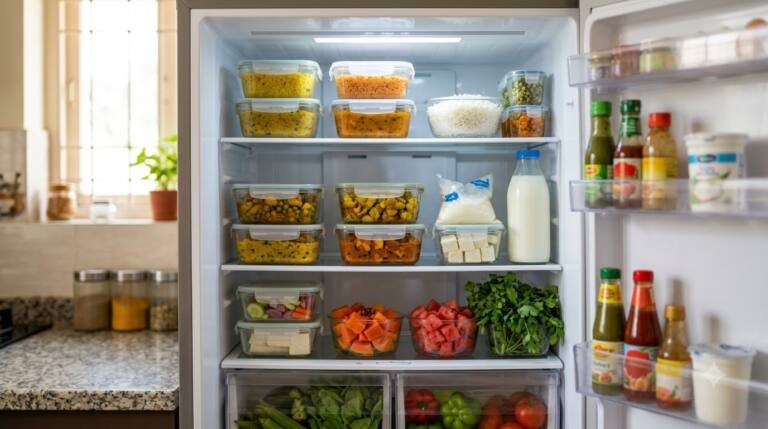 Food Storage